

 Cart
Cart
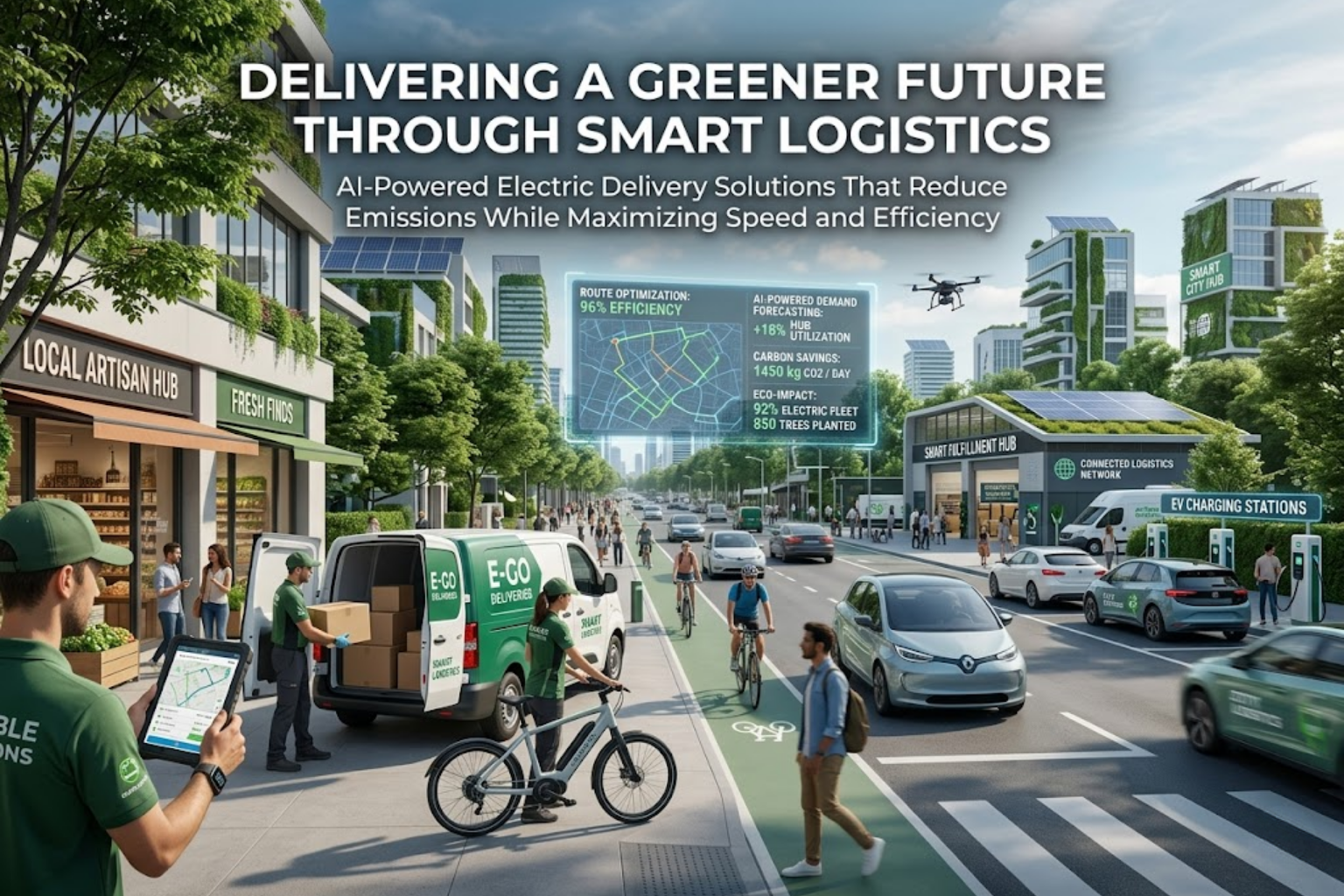



As cities continue to grow and consumer demand for faster deliveries increases, logistics providers face the challenge of balancing efficiency with sustainability. Traditional delivery systems often contribute to traffic congestion, fuel consumption, and carbon emissions, creating environmental concerns that affect communities worldwide. Smart logistics is emerging as a powerful solution to these challenges. By combining artificial intelligence, electric vehicles, route optimization, and real-time data analytics, businesses can reduce their environmental impact while maintaining high levels of service and operational efficiency.
The Need for Sustainable Logistics
Modern supply chains are under increasing pressure to become more environmentally responsible. Customers, businesses, and governments are all seeking ways to reduce carbon footprints and support sustainable transportation practices.
Logistics operations account for a significant portion of urban emissions, particularly during last-mile delivery. Adopting smarter and greener delivery methods helps organizations meet sustainability goals while improving overall operational performance.
How AI is Transforming Logistics
Artificial intelligence is reshaping logistics by enabling smarter decision-making across every stage of the delivery process. AI-powered systems analyze traffic patterns, delivery schedules, customer demand, and route efficiency to identify the most effective transportation strategies.
By leveraging predictive analytics and automation, logistics companies can reduce unnecessary travel, improve delivery accuracy, and maximize resource utilization. These improvements lead to lower costs and reduced environmental impact.
Electric Vehicles Driving Sustainable Deliveries
Electric delivery vehicles are becoming a cornerstone of green logistics initiatives. Unlike traditional fuel-powered fleets, electric vehicles produce significantly fewer emissions and contribute to cleaner urban environments.
When combined with intelligent route planning and charging infrastructure, electric fleets can operate efficiently while supporting sustainability objectives. Businesses that invest in electric mobility are helping create healthier cities and more responsible delivery networks.
Optimizing Routes for Maximum Efficiency
One of the most effective ways to reduce emissions is through route optimization. Smart logistics platforms use real-time traffic data, weather conditions, delivery priorities, and vehicle performance metrics to determine the most efficient routes.
Optimized routing reduces fuel consumption, shortens delivery times, minimizes idle periods, and increases fleet productivity. These benefits create a positive impact for both businesses and the environment.
Building Smarter Cities Through Connected Logistics
Smart logistics extends beyond individual deliveries. Connected transportation networks play an important role in supporting smart city initiatives by reducing congestion and improving urban mobility.
Integrated logistics systems allow businesses, delivery providers, and city planners to collaborate more effectively, creating transportation networks that are cleaner, faster, and more sustainable. These innovations contribute to improved quality of life for residents while supporting economic growth.
Reducing Carbon Emissions Through Innovation
Sustainability is no longer a future goal—it is a present-day necessity. Smart logistics solutions help organizations measure, monitor, and reduce their carbon footprint through advanced technology and data-driven strategies.
By implementing electric fleets, intelligent routing systems, and automated logistics operations, companies can significantly decrease emissions while maintaining exceptional service standards. These innovations demonstrate that environmental responsibility and operational excellence can work together.
The Future of Green Logistics
The future of logistics will be defined by innovation, sustainability, and connectivity. As technology continues to evolve, AI-powered logistics platforms will play an increasingly important role in shaping greener supply chains and smarter transportation networks.
Organizations that embrace sustainable logistics today are positioning themselves for long-term success while contributing to a cleaner and more resilient future.
Conclusion
The future of delivery lies in smarter, cleaner, and more efficient logistics solutions. By embracing AI-powered technologies, electric mobility, and intelligent route optimization, businesses can reduce emissions while improving operational performance and customer satisfaction. As sustainability becomes a priority across industries, smart logistics offers a practical path toward greener supply chains and more livable cities. Companies that invest in innovative logistics solutions today are not only enhancing their competitiveness but also contributing to a healthier, more sustainable future for generations to come.

Leave a reply