

 Cart
Cart
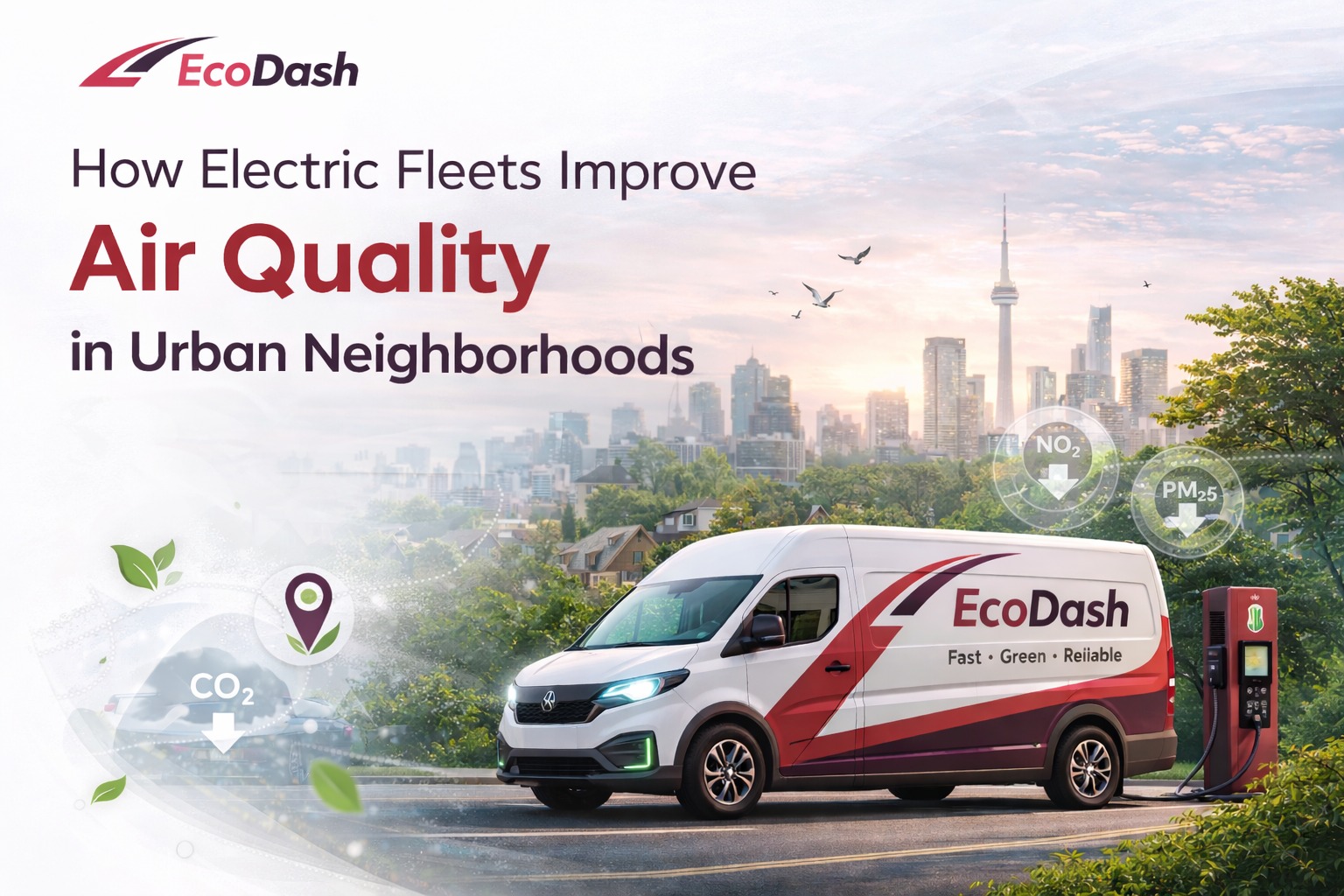


Urban neighborhoods are increasingly impacted by traffic congestion and vehicle emissions. As grocery delivery and quick commerce expand across Canadian cities, the type of vehicles used for last-mile delivery plays a critical role in maintaining clean air.
Electric fleets offer a powerful solution.
Unlike traditional fuel-powered vehicles, electric delivery vans produce zero tailpipe emissions. This means no direct release of carbon dioxide (CO₂), nitrogen oxides (NOx), or particulate matter into residential streets. The result is cleaner air, healthier communities, and reduced environmental strain.
Why It Matters
Urban air pollution is closely linked to respiratory issues, smog formation, and long-term health risks. Delivery vehicles operating daily in neighborhoods contribute to this problem when powered by gasoline or diesel.
Electric fleets help by:
Eliminating exhaust emissions
Reducing fine particulate pollution
Minimizing noise pollution in residential areas
Lowering overall carbon impact per delivery
When last-mile delivery transitions to electric vehicles, the cumulative environmental improvement is significant.
The Role of Smart Logistics
Sustainability is not only about switching to electric vehicles. Optimized route planning, smart batching of orders, and reduced idle time further decrease environmental impact.
Combining electric fleets with intelligent delivery systems ensures that convenience does not compromise air quality.
Cleaner Cities Start with Smarter Choices
As Canadian cities grow, sustainable logistics becomes essential. Electric delivery fleets support national climate goals while directly improving the quality of life in urban neighborhoods.
Cleaner transportation today leads to healthier communities tomorrow.


Leave a reply