

 Cart
Cart
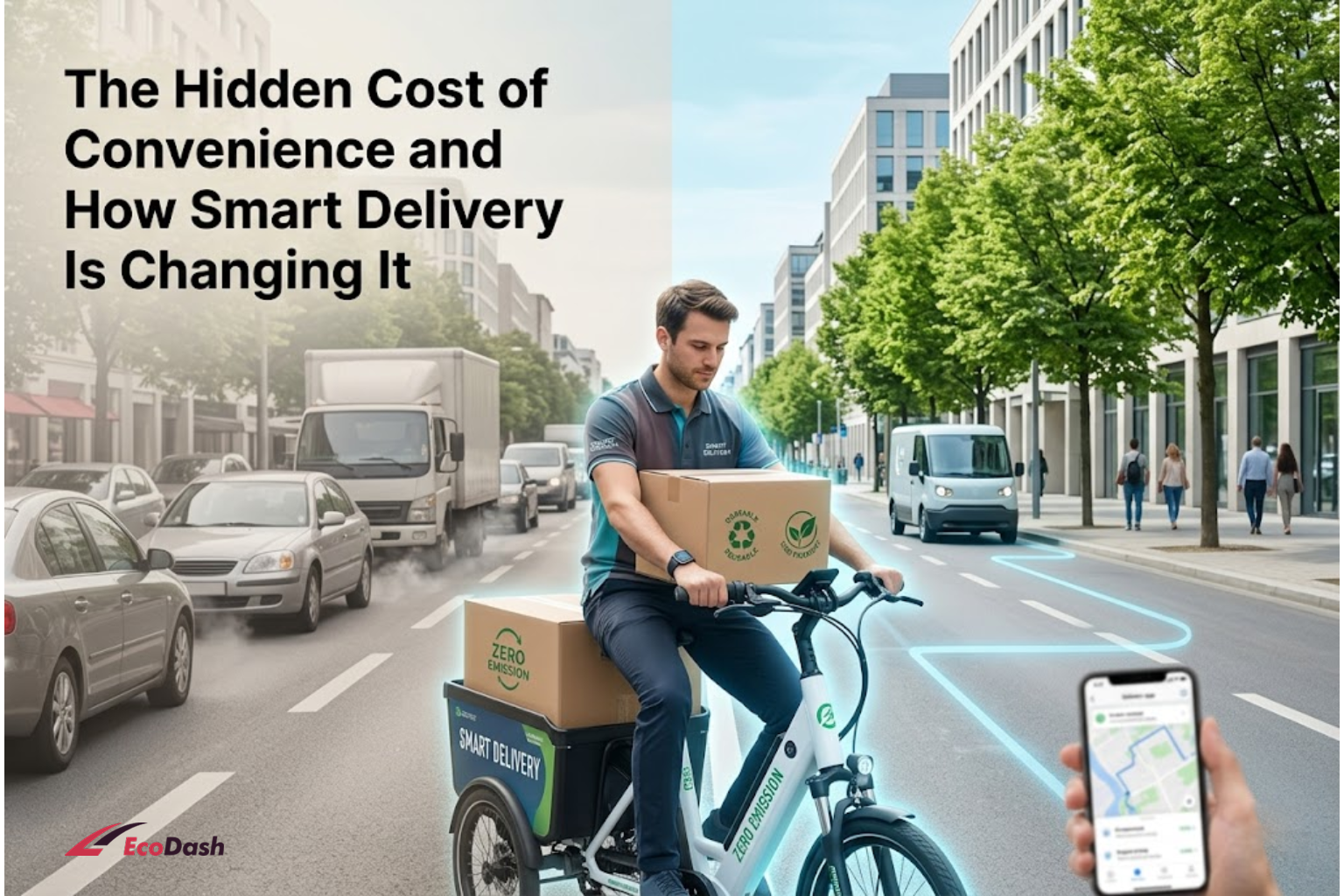



Convenience has quietly become the backbone of modern living. Groceries, medicines, and daily essentials are now available within minutes, delivered right to our doorstep. It feels effortless, fast, and essential.
But behind this ease lies a cost that is rarely discussed.
Every quick delivery, every short drive to the store, and every inefficient supply chain adds up to a growing environmental burden. What feels convenient on the surface often creates long-term impact beneath it.
The real question is not whether convenience is good or bad. The real question is how we can make it smarter, more efficient, and more sustainable.
The Problem with Traditional Convenience
Traditional convenience systems are built for speed, not efficiency.
Most delivery networks rely heavily on fuel-based transportation. Multiple small orders, scattered delivery routes, and repeated store visits result in excessive fuel consumption and increased emissions.
At the same time, consumers operate in a reactive cycle. We buy things when they run out, often leading to urgent orders, duplicate purchases, or unnecessary trips.
This combination creates a system that is not only environmentally taxing but also inefficient for everyday life.
A Smarter Approach to Everyday Needs
A better approach begins with shifting from reaction to prediction.
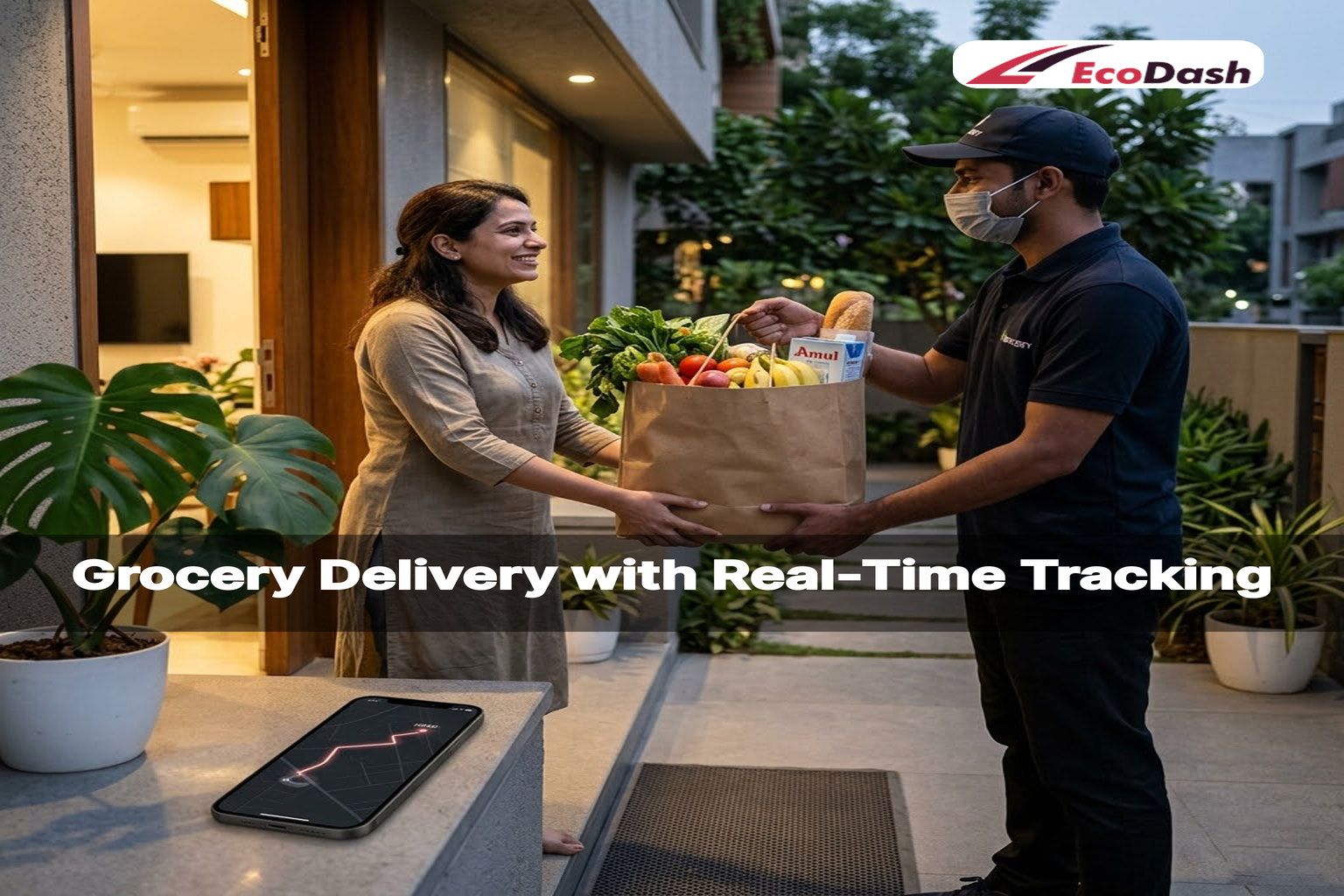
Instead of waiting for needs to arise, smarter systems anticipate them. Platforms like EcoDash use intelligent tracking and data-driven insights to understand consumption patterns and prepare in advance.
This proactive model reduces unnecessary deliveries, minimizes last-minute purchases, and creates a more balanced and efficient way to manage daily essentials.
It is not just about saving time. It is about removing friction from everyday life.
The Role of Electric Mobility
Sustainability in delivery starts with how things move.
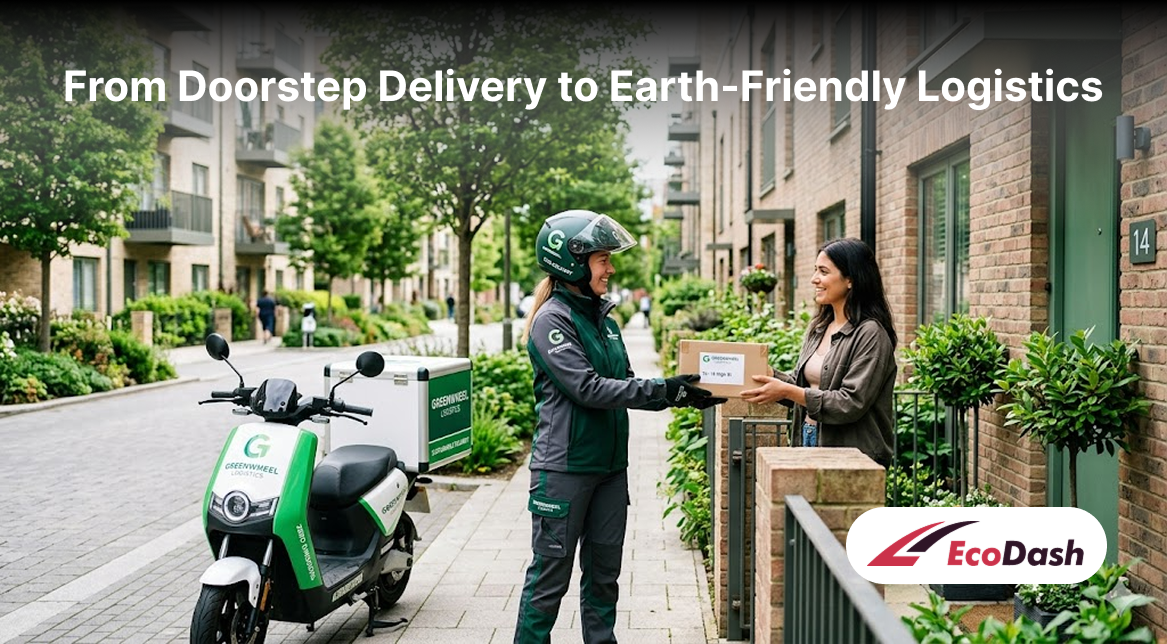
Electric vehicles are transforming last-mile delivery by eliminating emissions associated with traditional fuel-based transport. When combined with optimized routing and smart logistics, electric fleets significantly reduce the environmental footprint of each delivery.
This is a critical step toward building a system where convenience does not come at the expense of the planet.
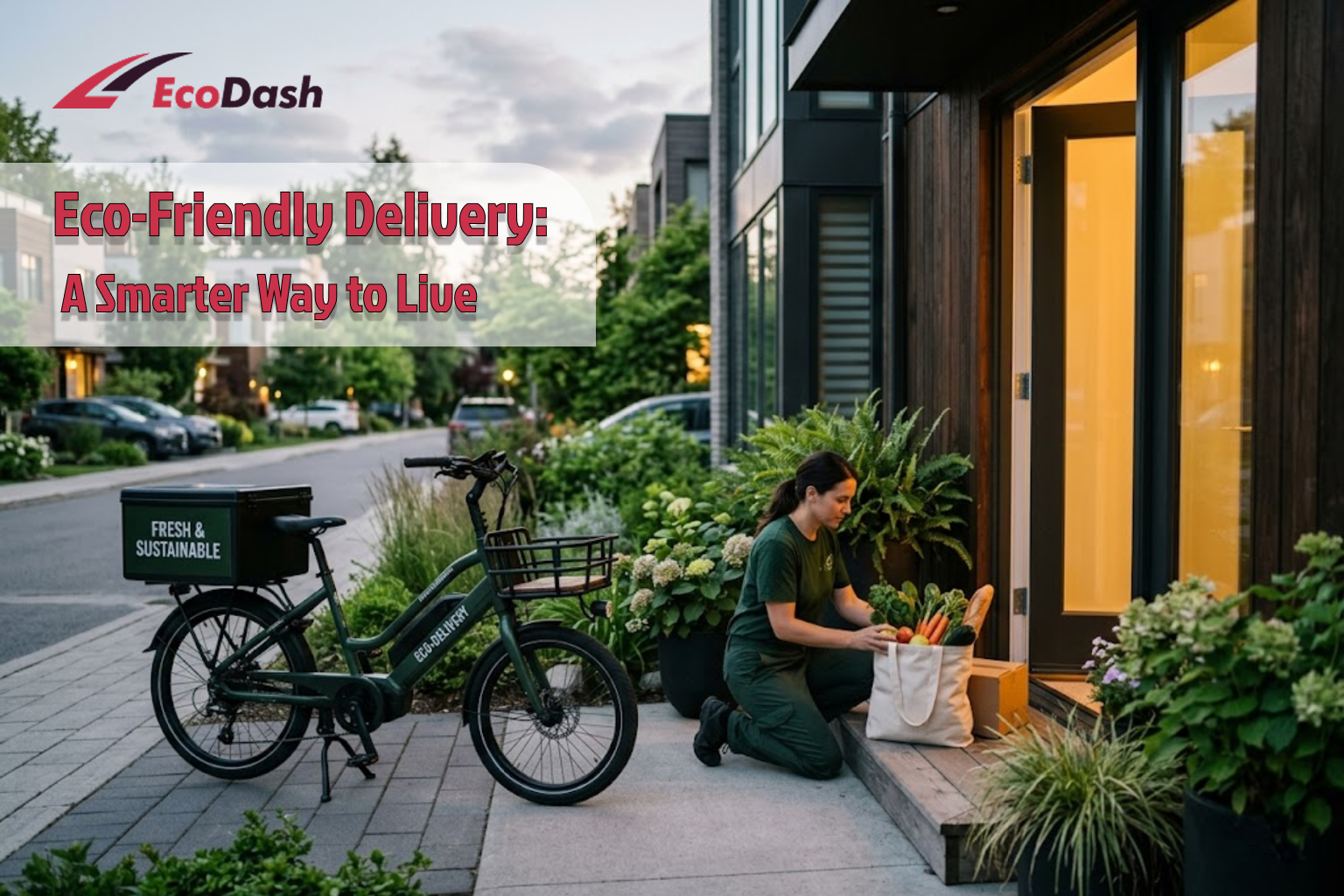
Deliveries become not just faster, but cleaner and more responsible.
From Convenience to Conscious Living
Consumer expectations are evolving.
People still value convenience, but they are increasingly aware of the impact their choices create. They want solutions that are not only efficient but also aligned with sustainable living.
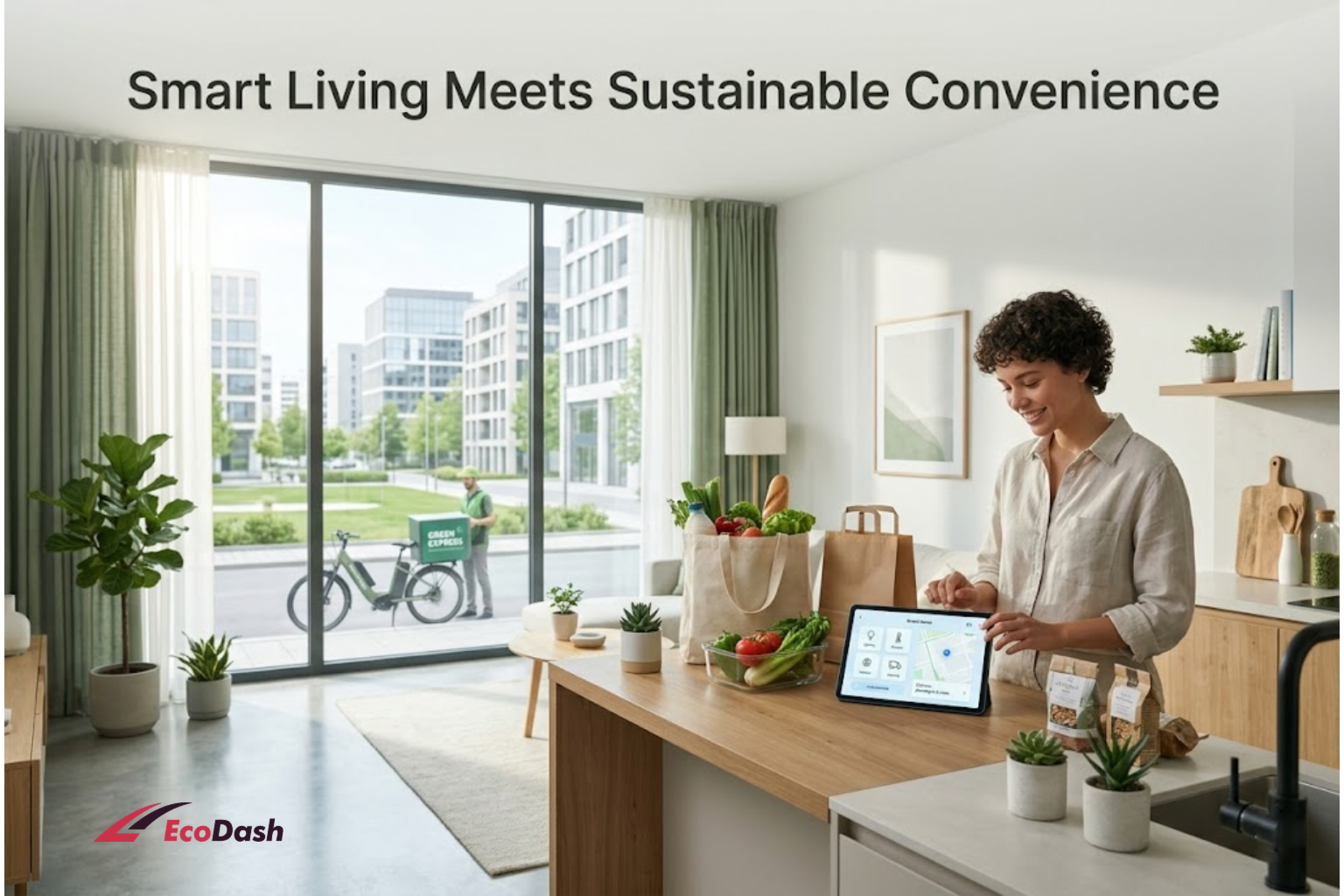
Smart delivery platforms are bridging this gap. By combining automation, clean energy, and intelligent systems, they offer a new kind of convenience — one that supports both lifestyle and responsibility.
This shift is shaping a more conscious urban lifestyle, where efficiency and sustainability go hand in hand.
Looking Ahead
The future of convenience is not defined by speed alone. It is defined by balance.
As technology continues to advance, we will see systems that seamlessly integrate automation, sustainability, and user-centric design. Daily essentials will be managed intelligently, deliveries will become cleaner, and consumption will become more mindful.
The goal is simple yet powerful — to create a lifestyle where convenience works in harmony with the environment, not against it.
Final Thought
Convenience is no longer just about saving time. It is about making better choices.
By rethinking how we manage our daily needs, we can move toward a system that is smarter, cleaner, and more sustainable.
Because the future of living is not just convenient. It is consciously designed.
Leave a reply