

 Cart
Cart
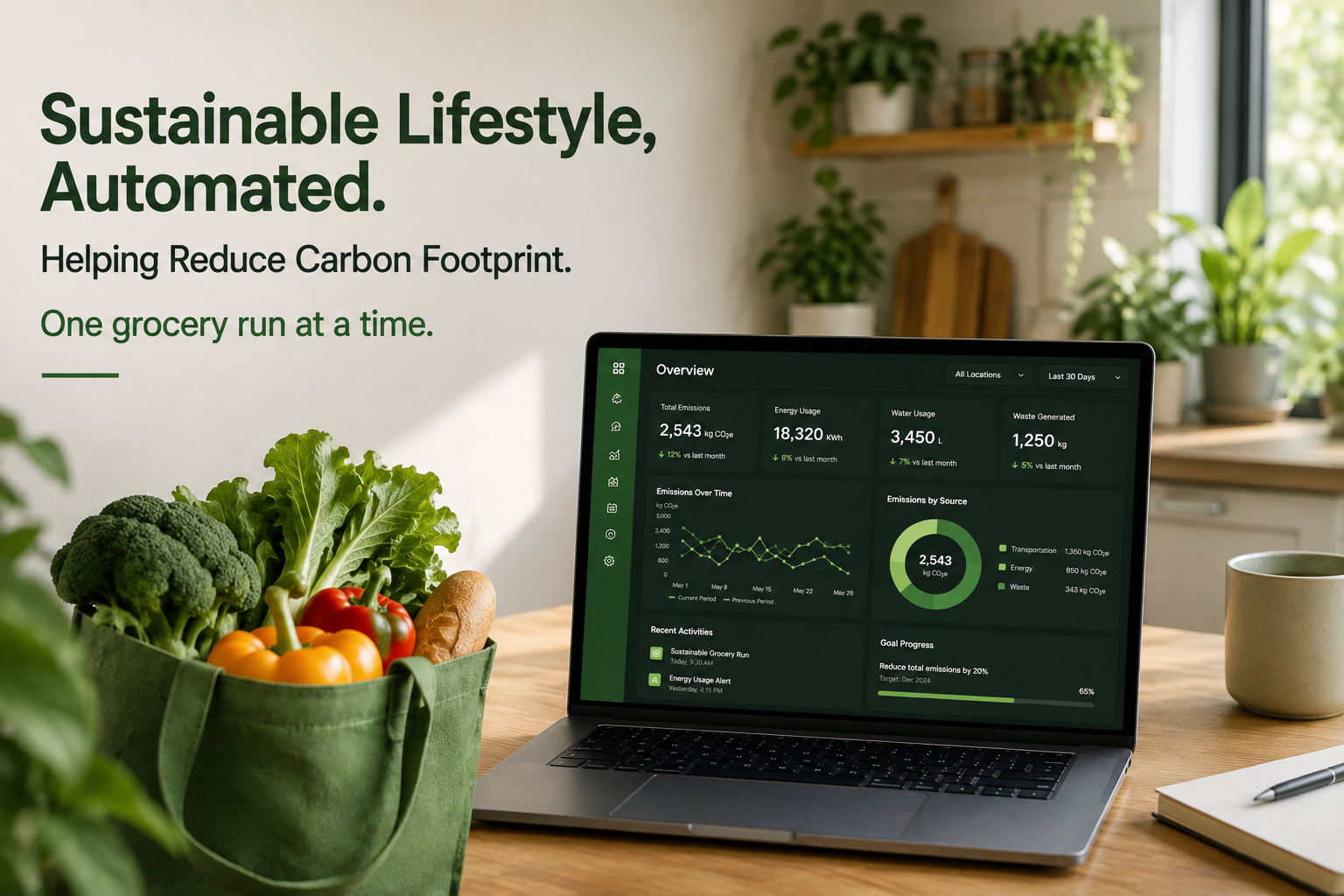



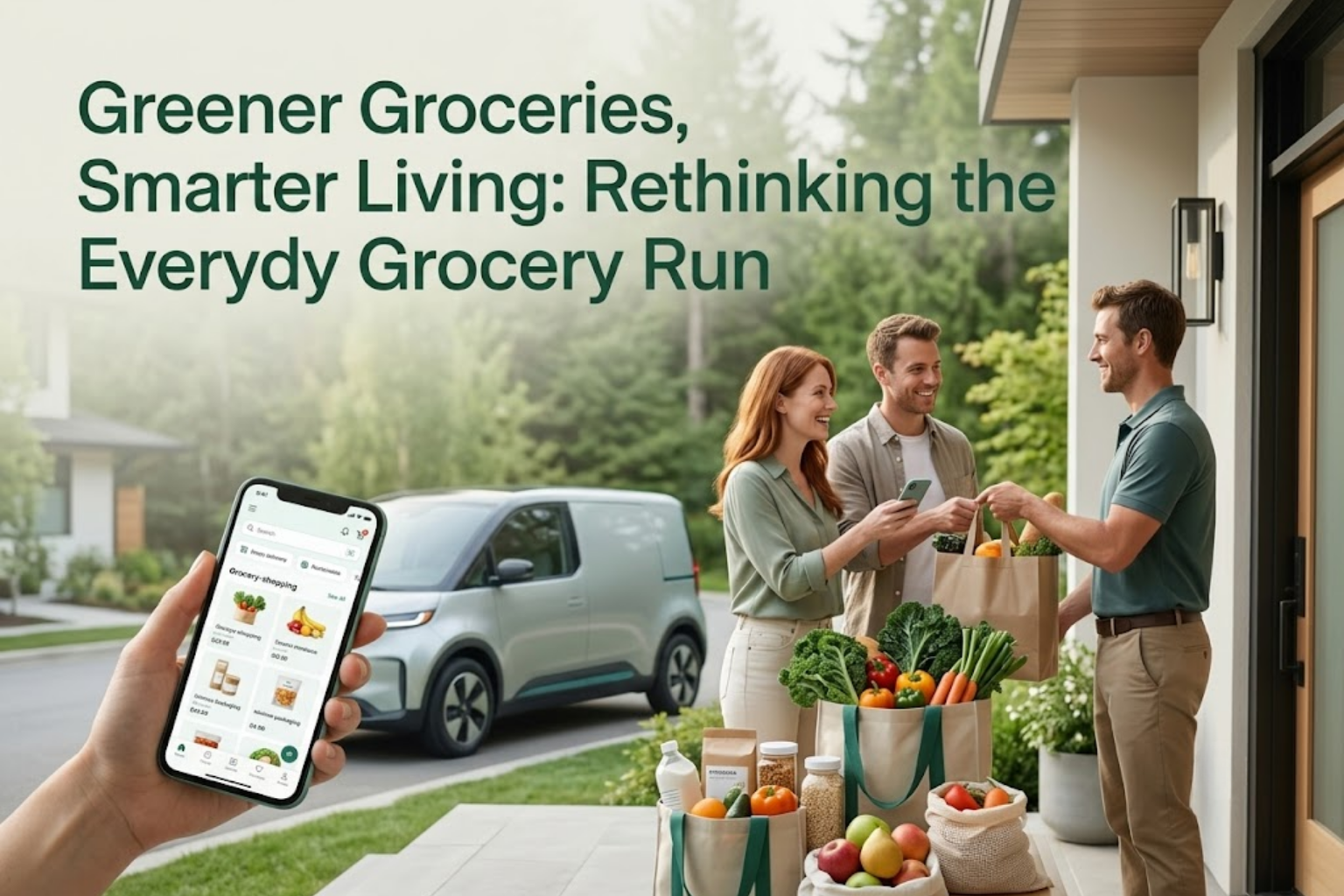
Living a more sustainable lifestyle does not always require major changes. Small everyday decisions, such as how often we travel to the grocery store, how much we purchase, and how efficiently we replenish household essentials, can contribute to a lower environmental impact.
For busy households, however, making sustainable choices consistently can be challenging. Grocery shopping often involves multiple trips, unnecessary purchases, packaging, and transportation. This is where technology can help create a more convenient and environmentally conscious routine.
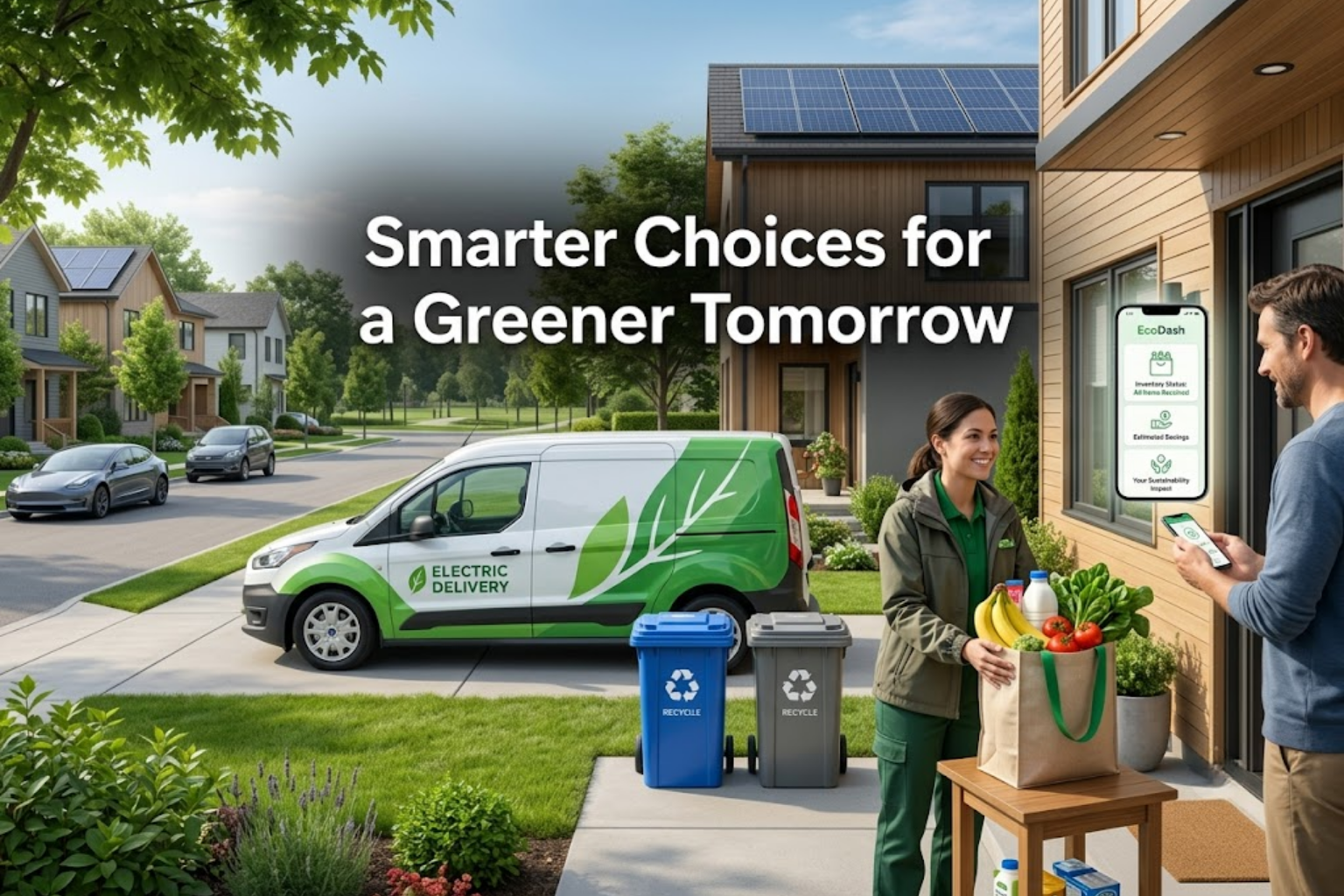
EcoDash combines automated grocery replenishment, electric vehicle delivery, smart consumption tracking, and technology-driven logistics to make everyday shopping more convenient while supporting sustainable living.
What Does a Sustainable Lifestyle Really Mean?
A sustainable lifestyle is about making everyday choices that reduce unnecessary consumption and minimize environmental impact. It can include using reusable products, reducing food waste, choosing efficient transportation, buying only what is needed, and being more conscious of how products are sourced and delivered.
Sustainability does not have to mean completely changing your lifestyle overnight. Instead, small improvements in everyday routines can gradually create a meaningful difference.
Grocery shopping is one area where these changes can have a practical impact because it is a recurring household activity.
Why Grocery Shopping Can Affect Your Carbon Footprint
A typical grocery routine can involve driving to a store, making multiple trips throughout the week, purchasing more products than necessary, and using additional packaging.
For households that frequently purchase everyday essentials, repeated trips can increase transportation requirements and make shopping less efficient.
A smarter approach is to understand what your household regularly consumes and replenish those products when they are actually needed.
This is where automated replenishment and smart consumption tracking can help.
How Automated Grocery Replenishment Works
Automated replenishment changes the traditional approach to grocery shopping.
Instead of waiting until an essential item runs out and making an additional trip to the store, smart technology can help monitor usage and identify when products need to be replenished.
EcoDash uses IoT-connected smart jars to monitor consumption and alert users when it is time to refill certain essentials.
This approach can make household shopping more predictable while reducing the need for unnecessary last-minute trips.
Reducing Unnecessary Grocery Trips
One of the simplest ways technology can support sustainable shopping is by helping households consolidate their purchases.
When several essential products are needed at different times, people may make multiple trips to the supermarket. A more organized replenishment system can help group these requirements together.
EcoDash's automated delivery model is designed to make everyday essentials accessible while reducing the need for unnecessary shopping trips.
Fewer unnecessary trips can mean greater convenience for consumers and potentially lower transportation-related emissions.
The Role of Electric Vehicles in Sustainable Delivery
Transportation is an important part of the environmental impact associated with delivery services.
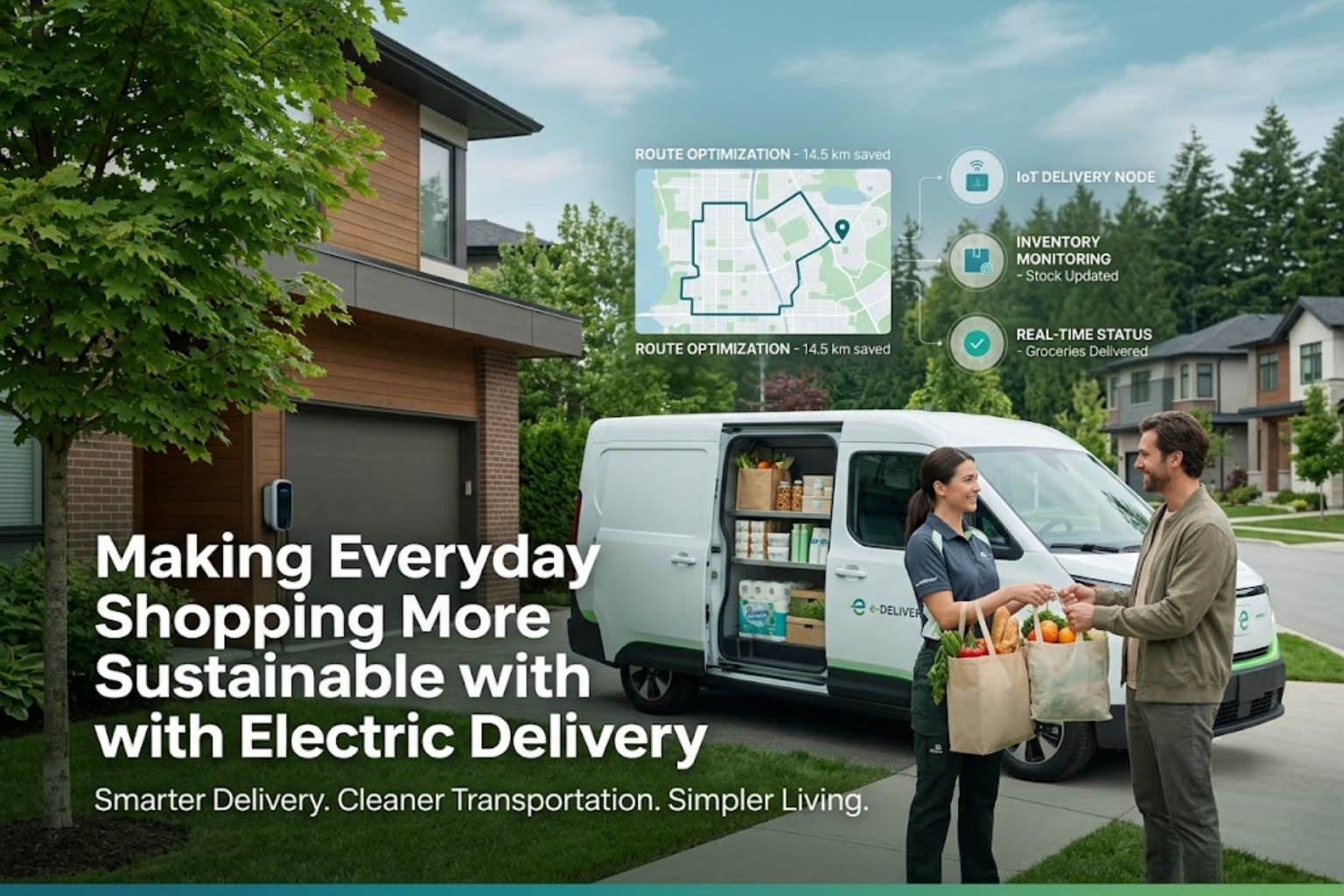
EcoDash uses an electric vehicle delivery fleet as part of its sustainability-focused approach. Electric vehicles can reduce dependence on conventional fuel-powered vehicles, particularly for local delivery operations.
When electric delivery vehicles are combined with efficient routing and localized fulfillment, grocery delivery can become more aligned with environmentally responsible transportation.
Smart Technology Can Make Shopping More Efficient
Sustainability is not only about the vehicle delivering the groceries. The entire process matters.
Technology can help businesses understand demand, manage inventory, optimize delivery routes, and determine where products should be positioned for faster fulfillment.
EcoDash uses AI-driven demand forecasting and strategically located dark stores to optimize inventory and reduce travel distances.
Better demand forecasting can also help reduce situations where products are overstocked or transported unnecessarily.
Sustainable Shopping Without Sacrificing Convenience
One common misconception is that sustainable living always requires more effort.
In reality, technology can make sustainable habits easier to maintain.
Automated grocery replenishment can reduce the time spent planning recurring purchases. Electric vehicle delivery can provide a more environmentally conscious delivery option. Smart consumption tracking can help households understand their usage patterns.
Together, these technologies can connect convenience and sustainability rather than treating them as competing priorities.
Making Better Choices One Grocery Run at a Time
Sustainable living does not need to be perfect.
A household may start by reducing unnecessary grocery trips, choosing reusable bags, purchasing only what is required, or using automated replenishment for frequently consumed essentials.
Over time, these small changes can become part of a regular routine.
The goal is not simply to shop differently. It is to create a smarter system around everyday consumption.
How Technology Is Shaping Sustainable Grocery Delivery
The future of grocery delivery is becoming increasingly connected.
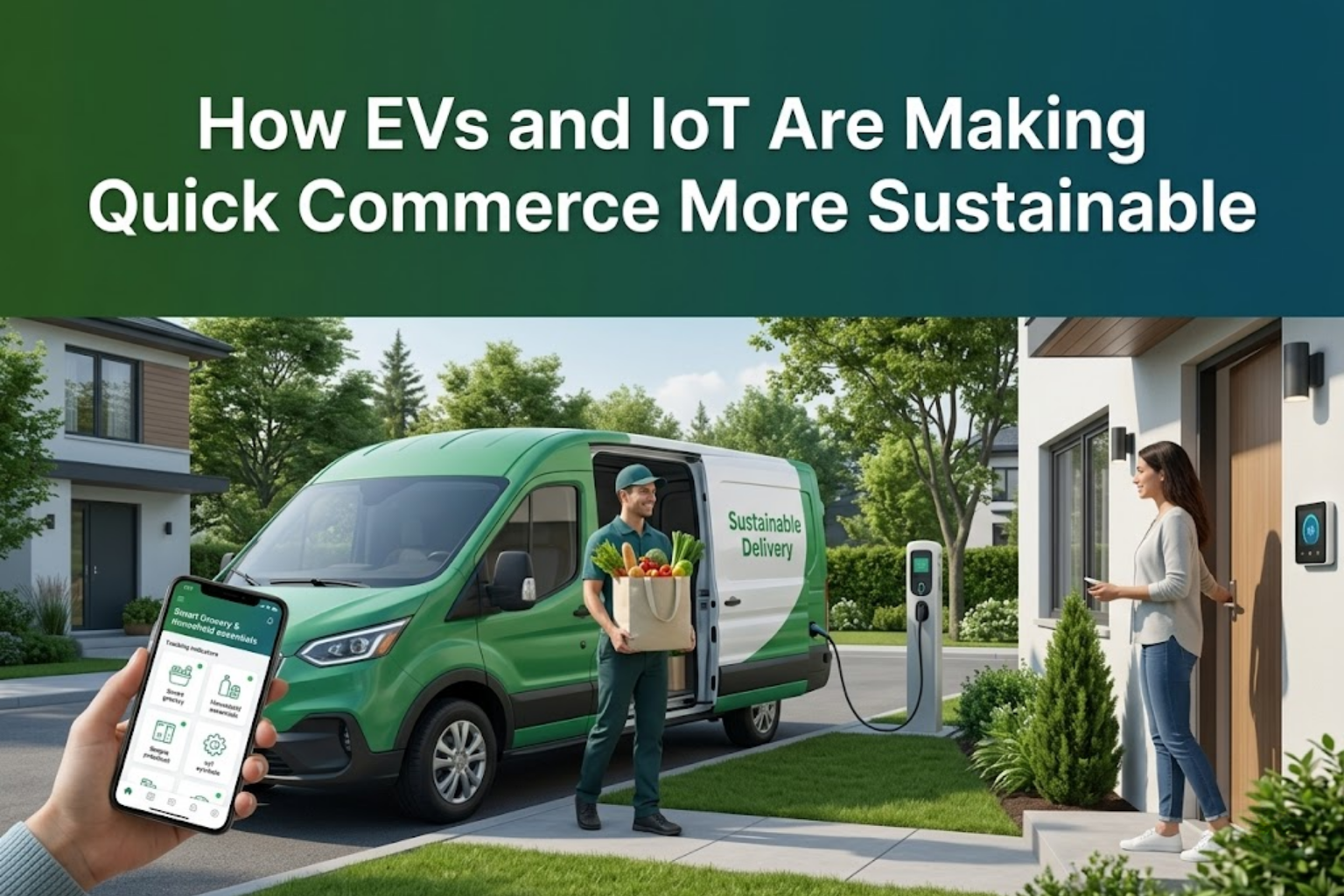
AI can help predict demand, IoT devices can monitor household consumption, and electric vehicles can support cleaner local delivery. When these technologies work together, grocery shopping can become more efficient and more environmentally conscious.
EcoDash combines these ideas through its focus on EV-powered replenishment, smart consumption tracking, and automated delivery of everyday essentials.
This technology-driven approach demonstrates how sustainability can be integrated into everyday routines rather than treated as an occasional activity.
The Future of Sustainable Everyday Shopping
As consumers become more conscious of environmental impact, grocery and delivery platforms will need to focus on more than speed and convenience.
Future solutions are likely to combine automation, artificial intelligence, connected devices, efficient logistics, and electric transportation.
This can help create a shopping experience where households receive what they need while reducing unnecessary journeys and improving resource efficiency.
For consumers, the result is a simpler daily routine. For businesses, smarter logistics can create more efficient operations. For the environment, reducing unnecessary transportation and improving delivery efficiency can support more sustainable consumption patterns.
Conclusion
A sustainable lifestyle does not have to begin with a major lifestyle change. It can start with something as simple as one grocery run at a time.
By combining automated replenishment, smart consumption tracking, AI-driven demand forecasting, and electric vehicle delivery, technology can make everyday shopping more convenient while supporting environmentally responsible habits.
EcoDash is building a connected approach to grocery delivery that focuses on convenience, efficiency, and sustainability. Its EV-powered fleet, IoT-driven replenishment system, and technology-focused logistics demonstrate how everyday shopping can become smarter and more sustainable.
The future of sustainable living is not necessarily about doing more. It is about using smarter systems to make better everyday choices—one grocery run at a time.
Leave a reply